Feature 01
Order Management
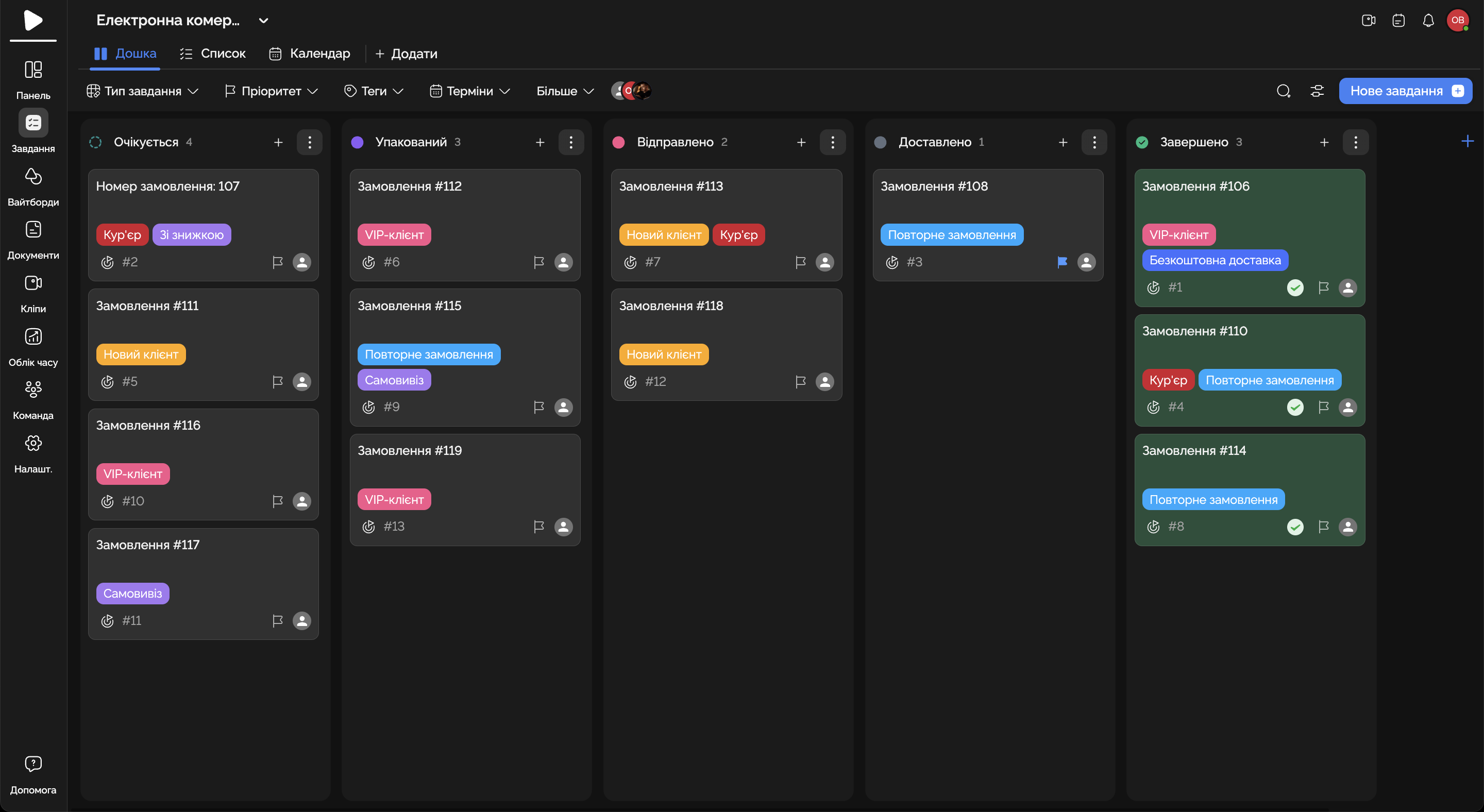
Manage orders directly via a Kanban board, control status and progress.
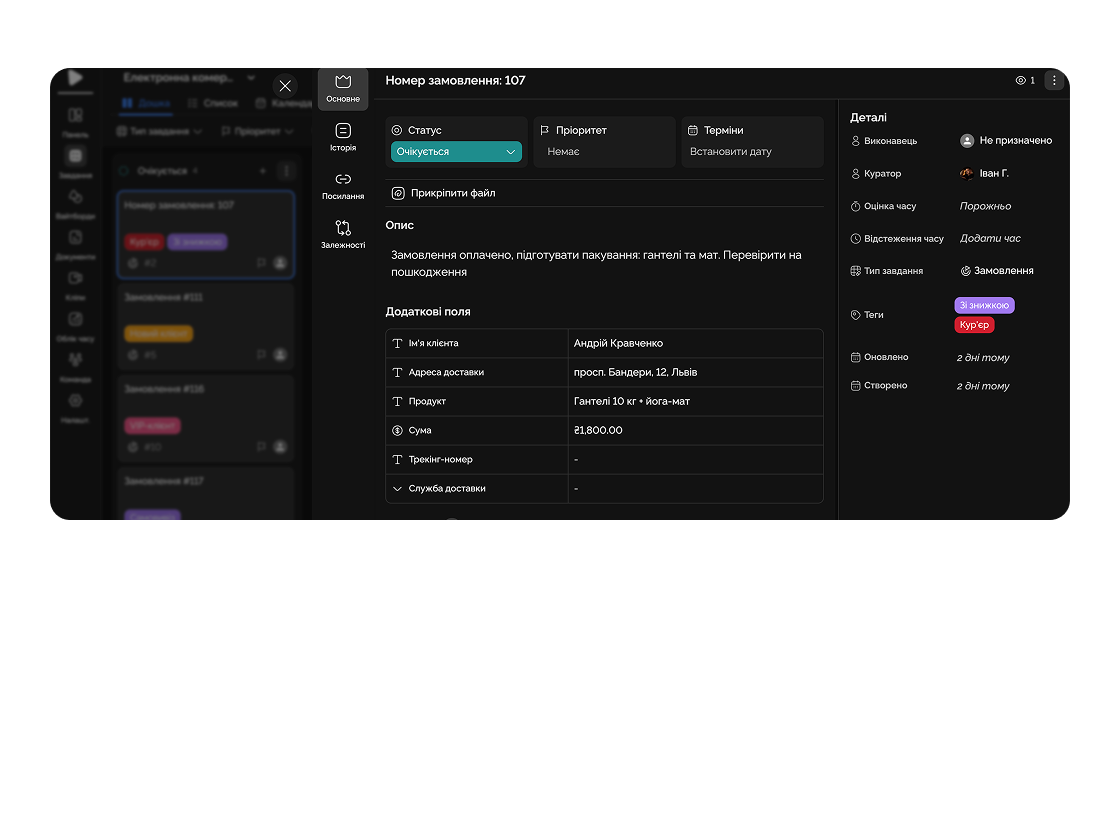
Easylim helps efficiently manage orders, clients, marketing, and analytics — all in one tool.
Built for
By the numbers
+34%
repeat-purchase conversion
customer data
−2 hrs
on daily team sync
Easylim CRM
1 dashboard
for the whole team
2025 survey
Orders, marketing, warehouse, support — no tab switching.
Feature 01
Manage orders directly via a Kanban board, control status and progress.
Feature 02
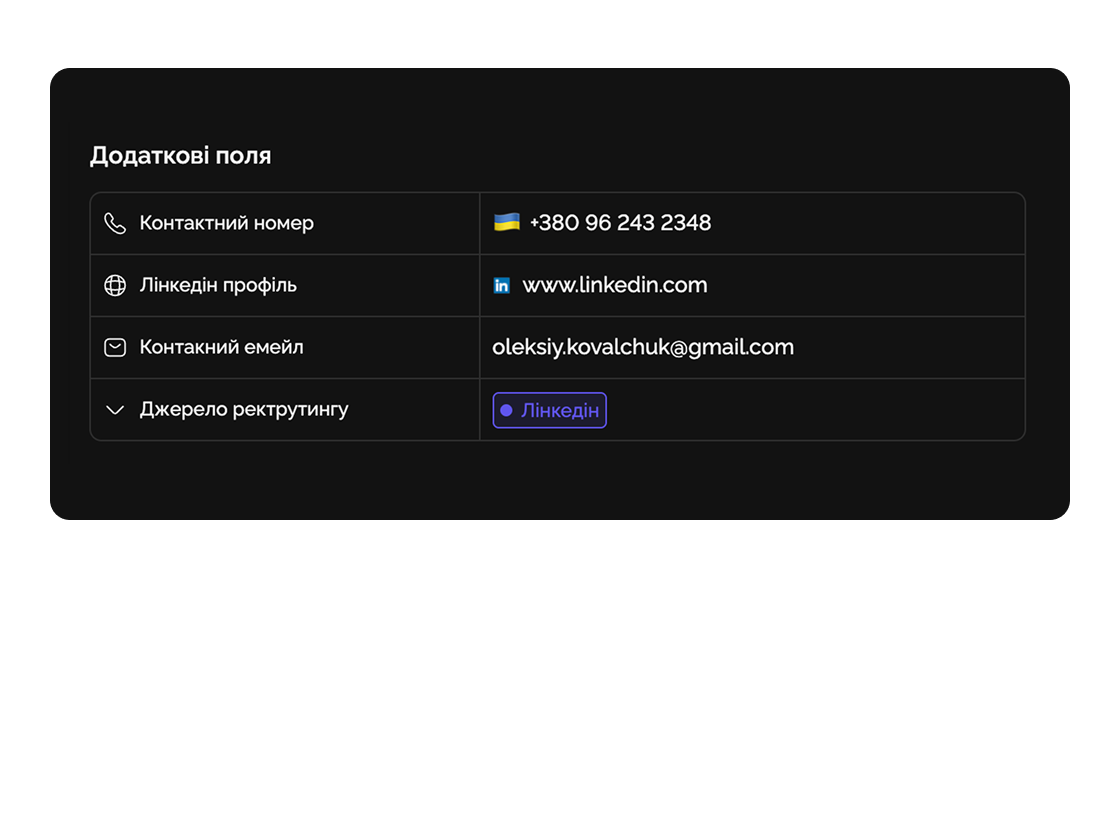
Enter client information directly into the relevant task.
Feature 03
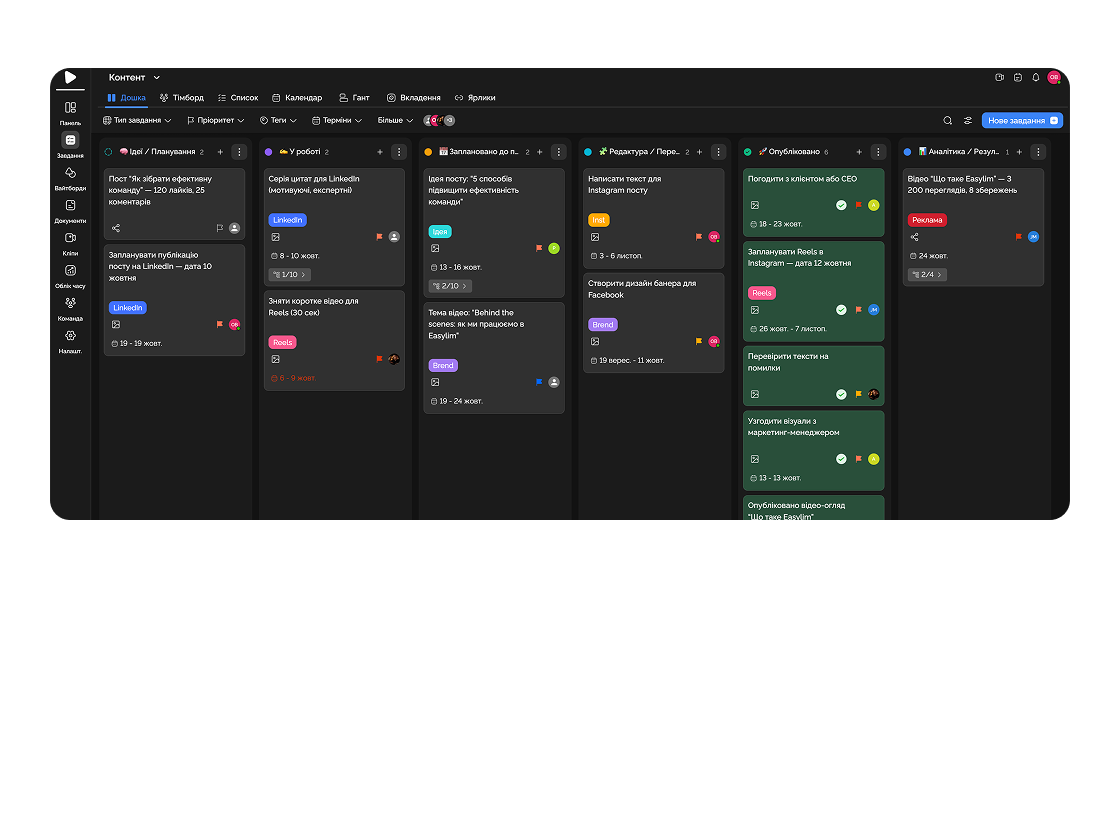
Plan, launch, and analyze advertising campaigns and content.
Feature 04
Analyze team performance via a convenient dashboard and track workload.
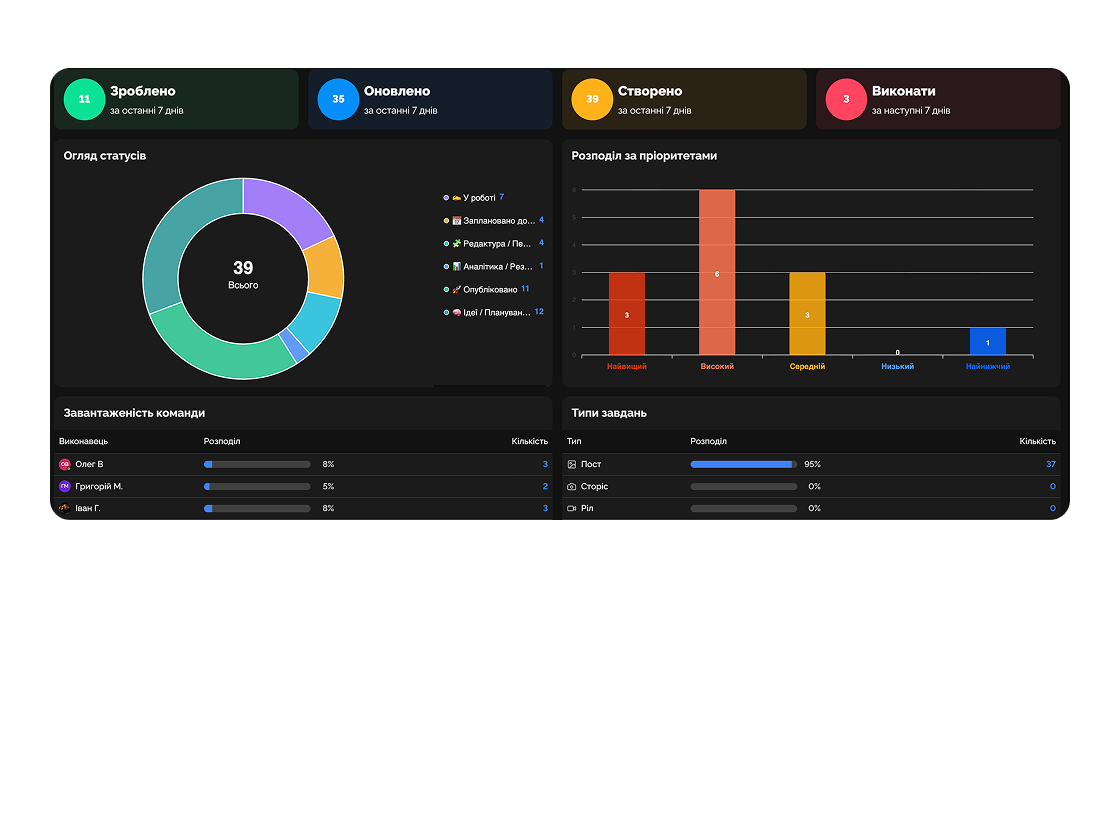
All requests in one place: managers see the status of each order, who handles it, deadlines, and priorities — avoiding confusion, missed clients, and duplicate work.

Each member sees their tasks and interacts with them efficiently.

Deep dive
5 chapters
Every DTC store past 200 orders/day has the same symptom: <strong>the team is living in three or four tools at once</strong>. Shopify holds orders, a spreadsheet holds stock, Slack holds return threads, Google Sheets holds the launch plan for the next SKU. Your ops manager physically can't answer "where's order #4821?" without switching tabs. Here's how to organise the order pipeline, inventory, returns and launches inside Easylim — and the moment your business has outgrown a light tool and needs an actual ERP.
Розділ
Shopify (or WooCommerce, or your marketplace) shows order status — paid / fulfilled / refunded. But the operational status is different: "new → packed → shipped → delivered → reviewed". Between "paid" and "fulfilled" you may have 2 hours or 2 days depending on the warehouse, and Shopify won't tell you which.
In Easylim, create an "Orders" project with 5 columns. Each new Shopify order drops in as a card in "New" via Zapier or a native integration. Your ops lead sees the queue, pulls into "Packed" once stock is confirmed, then "Shipped" once handed off. The card has the order ID, customer, total, SKUs, address — everything you need without jumping back to Shopify.
SLA: ship in 24 hours — that's the threshold below which NPS drops fast. In Easylim, build a filter "new > 24h" (red badge), a Slack notification to #orders-stale, and a "delayed" tag with a reason (out of stock / payment dispute / fraud check) so you can analyse later.
Anna K.
Mike R.
Oksana B.
Liam T.
Nora P.
Ivan S.
Sara M.
Розділ
The classic small-DTC disaster: a SKU is gone from the warehouse, but Shopify still shows "in stock" because the inventory sync runs hourly. In that hour, 12 orders come in — 8 of them get cancelled. Customers furious, rating drops.
Safety stock is the unit threshold that auto-flips a SKU from "available" to "restock now" and blocks new sales. For a bestseller doing 50 units/day, safety stock = 20-30 units. For long-tail SKUs, 2-3 is enough.
In Easylim, keep a separate "Inventory" board where each card = a SKU. Each card has a custom field "stock" (number), a "threshold" field, and an auto-warning badge when stock < threshold. Anti-pattern: keeping inventory only in Shopify admin and learning about stockouts from angry customers.
Big mistake — panic-buying "with reserve" after the first stockout. Three months later you're sitting on $200k of inventory, half of it dead SKUs. Look at sell-through (units/day) over the last 30 days and aim for 30-45 days of cover, not "a year".
Розділ
DTC brands underestimate the cost of a return: it's not just refund + shipping, it's also 30-40 minutes of support work (confirm, issue label, receive, inspect, refund, update stock). At 50 returns/week that's a full-time person.
Self-serve returns: the customer initiates via a form, a bot checks eligibility (bought < 30 days ago, not a sale item, not visibly worn), generates the label via the carrier / Shippo / Stripe API. CS only steps in for edge cases (out of return window, damage claim).
In Easylim this is a Returns board with 5 stages + automation: request → auto-validate → label → received at warehouse → refund. Each step shows how long it took and where it stalls. The metric to watch: average cycle time. If it's over 5 days, something's broken (usually the "received at warehouse" step, when staff don't scan inbound parcels on time).
Request
customer · self-serve
Reviewed
CS · Maria
Label sent
auto · carrier
Received
warehouse · QA
Refunded
Stripe · auto
Розділ
Launching a new collection isn't "shoot photos and add to Shopify". It's 15-20 tasks across 4-5 teams: photography, copy, PDP build, email segmentation, paid ads, PR/influencer seeding, warehouse (packaging), CS (prep response macros).
A 21-day countdown template works reliably: D-21 photos, D-14 copy, D-10 PDP, D-7 email teaser, D-5 influencer seeding, D-1 ads live, D-0 launch. Each task is a card with assignee, due date and a "what to ship" checklist.
In Easylim this is a project template — clone it per launch, plug in the D-0 date, every deadline recalculates. Anti-pattern: building each launch from scratch. Five launches in, you have the same structure with different SKU names — turn it into a template.
Winter capsule · 8 SKUs
21-day countdown · cross-team
Розділ
Easylim is a tool for DTC and small/mid e-commerce: an operational pipeline, team coordination, lightweight stock monitoring. It doesn't replace accounting, doesn't run a general ledger, doesn't consolidate multiple legal entities.
Rule of thumb: up to 50,000 orders/month or 5,000 SKUs per legal entity — Easylim handles it. Beyond that, you hit cases where an ERP (NetSuite, SAP, Microsoft Dynamics) is the right answer. If you've got 3 entities across 5 countries, wholesale to 200 retailers, and 3 fulfilment partners — that's no longer a task-tracker problem.
Realistic setup for a scaled business: ERP for finance and warehouse accounting, Easylim for the team's operational pipeline (launches, marketing, CS, content). Integrate via API/Zapier — order statuses sync, but the team doesn't "live in the ERP" because that hurts.
If you haven't outgrown light tools yet, but already have 5+ people in ops — look at dashboards for management overviews and finance ops for AP/AR. Often "we need an ERP" really means "we need a real pipeline for our team".
< 50k orders/mo · easylim · else · ERP
Easylim connects to the apps your team already lives in.
Other industries
No card required. Free tier forever.


